Digital transformation for financial management in the public sector
Introducing UX practice to a Ministry that had never used it
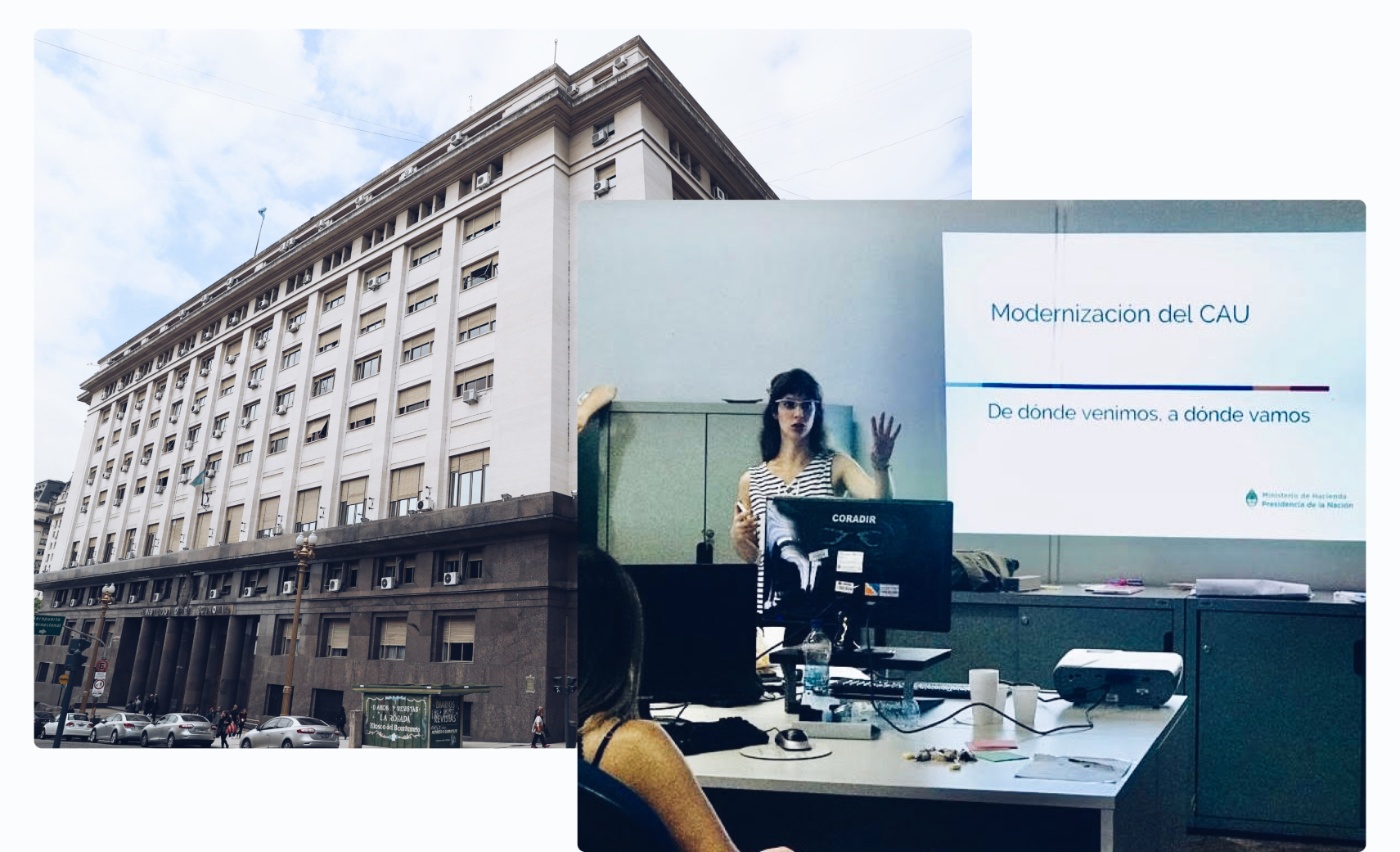
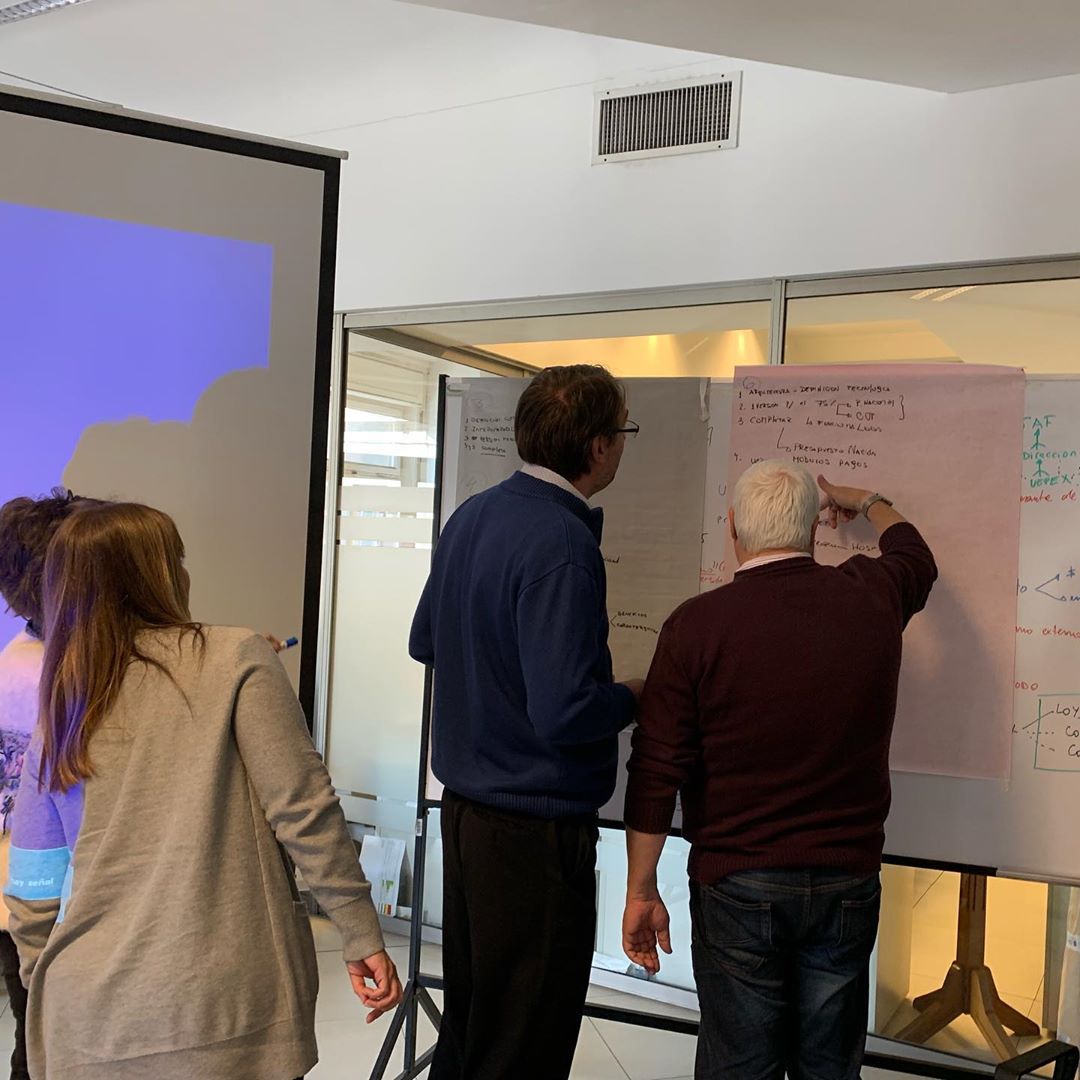
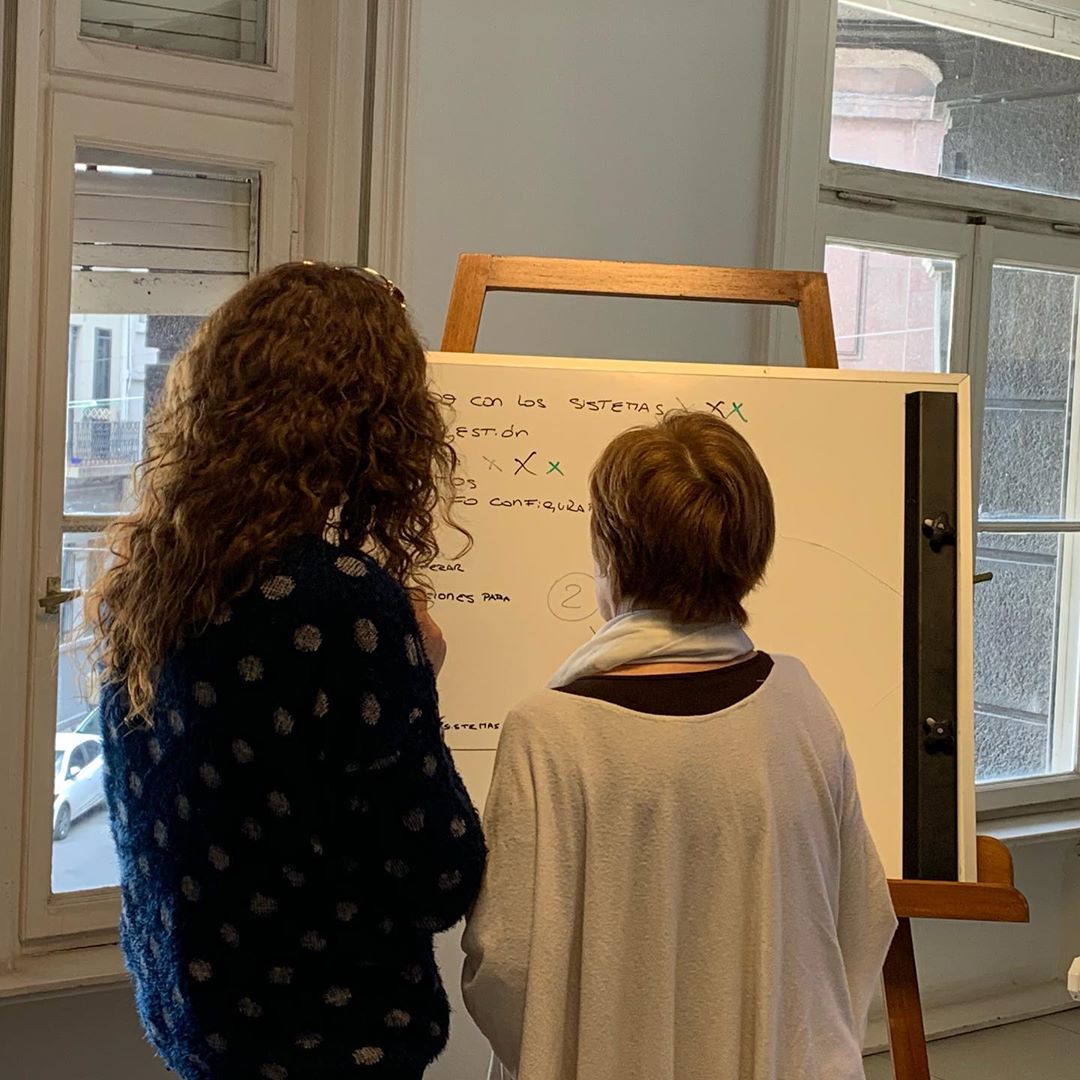
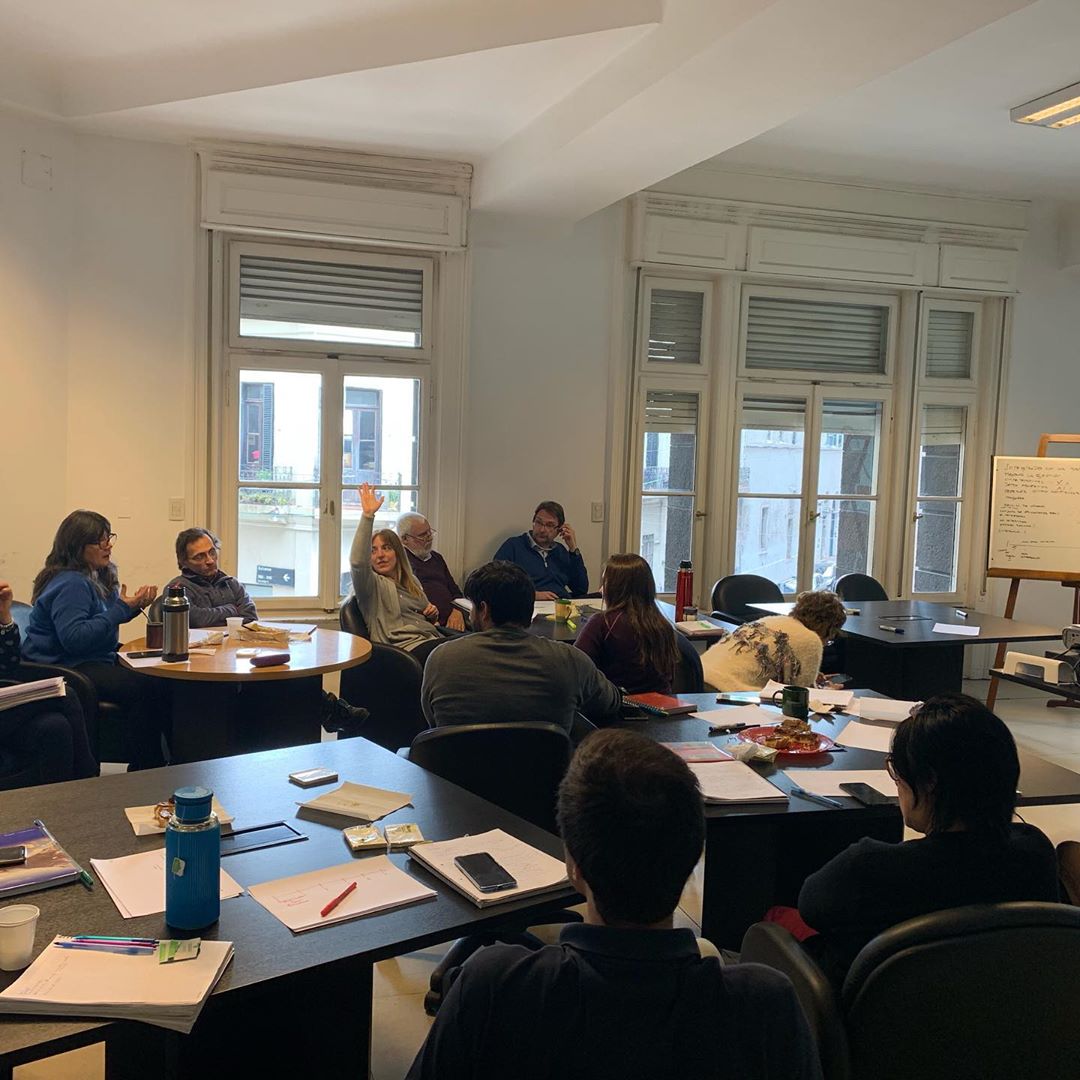
In 2019, I led a digital transformation project that motivated employees to recognize the importance of implementing UX practices in the Ministry for renewing the financial systems. As a result, I contributed to developing and enhancing a payment system called “UEPEX”, which is crucial for managing the budget, finances, and accounting in the public sector.
The system
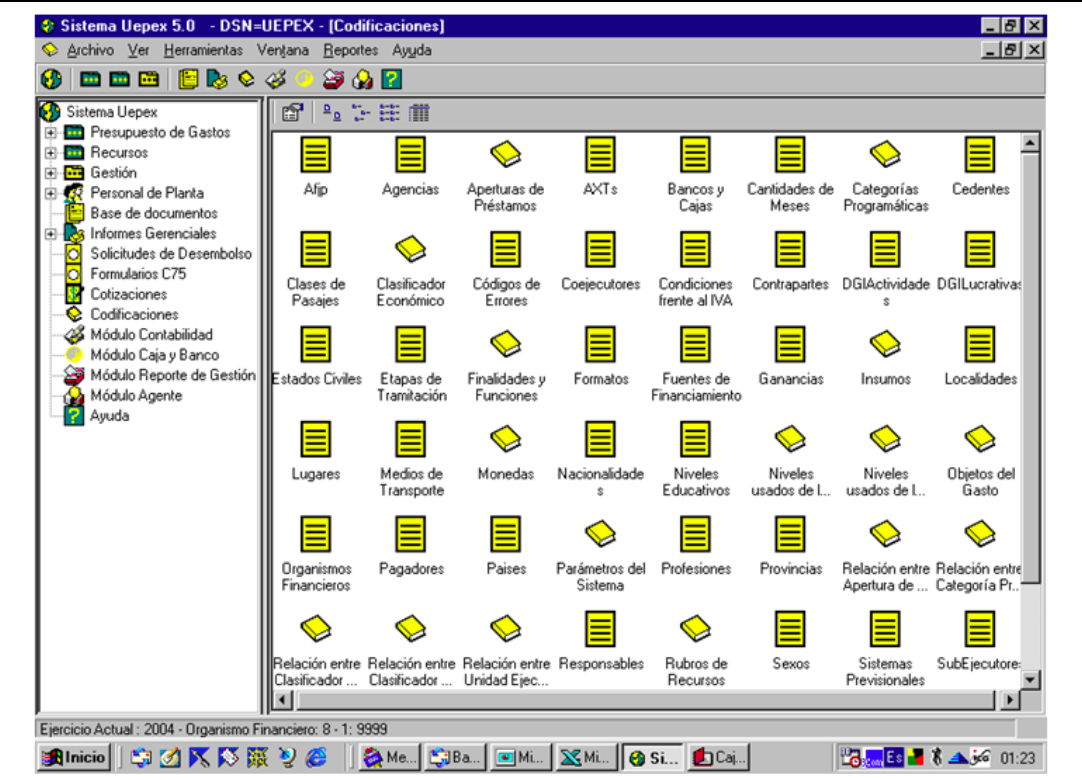
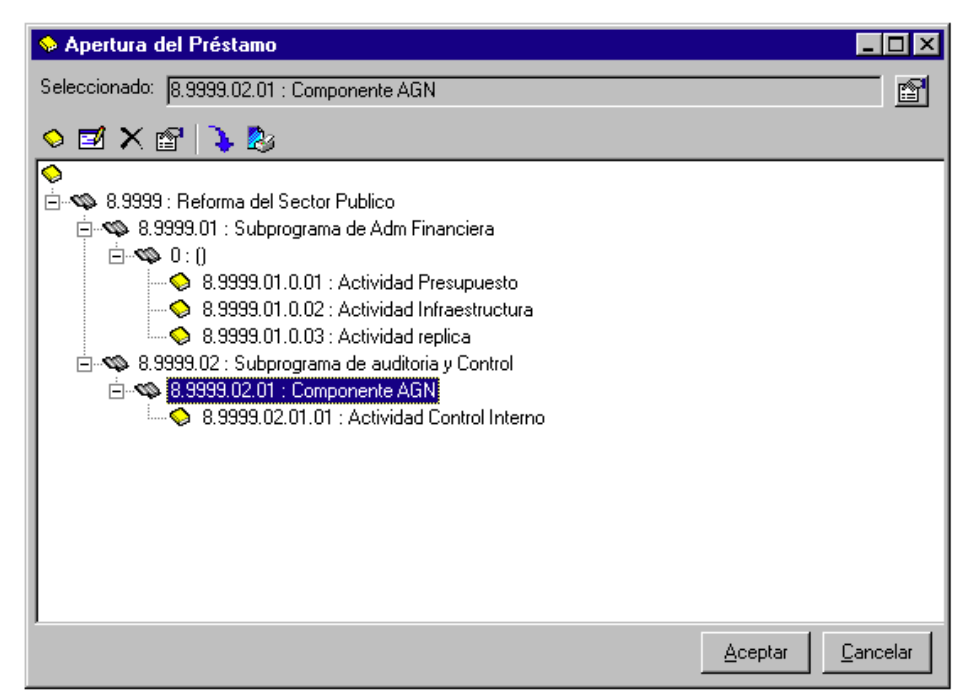
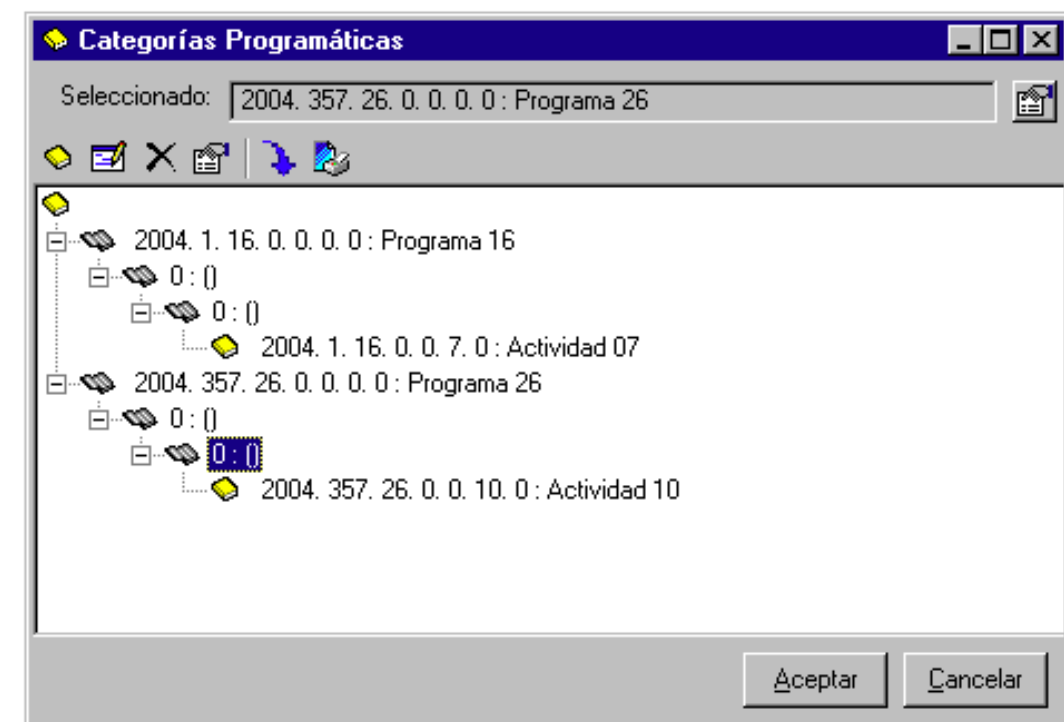
UEPEX is a financial software created in 2004. The objective is to execute external loans, for specific programmes or projects in Argentina.
The UEPEX helpdesk had increased incidents by 60% in 2018 due to usability issues and the learning curve during onboarding.
The organisation
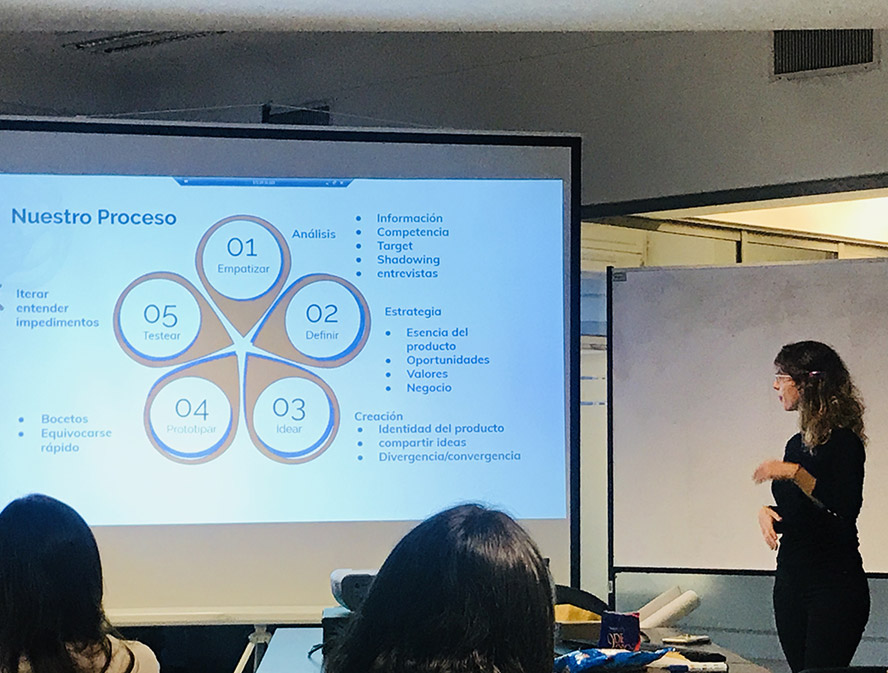
All teams must adopt agile, people-centric processes to innovate and build efficient products.
The testing and analyst team used outdated methodologies and lacked service design and UX skills, which led to blockages.
Objectives
- Involve functional analysts in user experience and new functional methodologies
- Define reasons to focus on user needs
- Acquire skills in user research techniques
- Understand the benefits of forming an interdisciplinary team and working collaboratively
- Demonstrate prototyping skills and develop the ability to test usability
- Understand the importance of measuring KPIs
- Achieve consensus between the parties to determine a long-term vision and purpose (three years)
- Find, understand, justify and propose the value and benefits proposal
- Investigate the risks and possible opportunities
- Determine a strategy to carry out the objective
- Identify tactics for the development of the final product
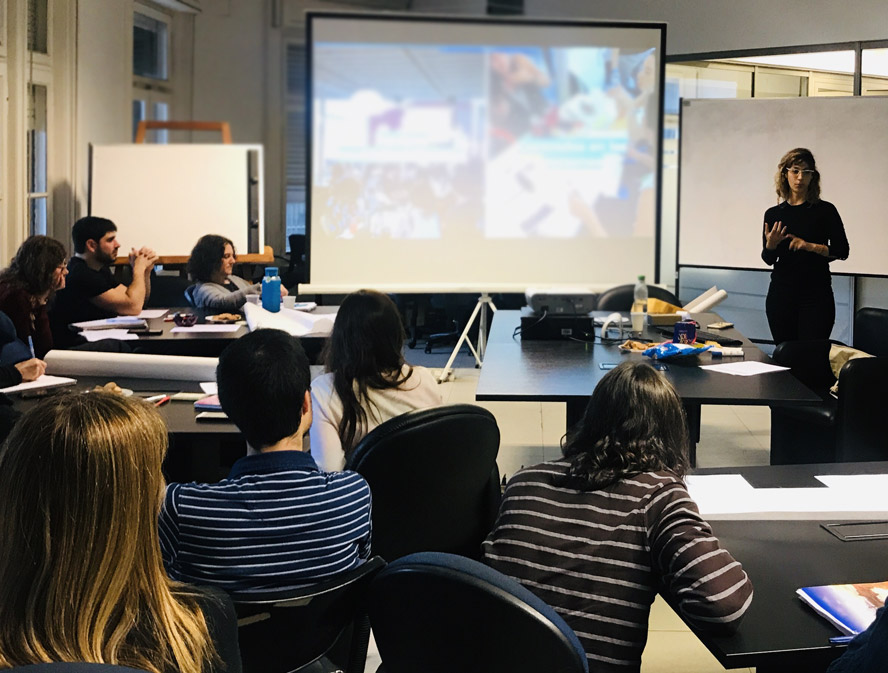
Session 1 — Introduction to service design
Understand the needs and opportunities that the project will offer us, and think about the vision of the product together.
Exercises- How to define the brand vision
- Five-year roadmap
Session 2 — Understanding the user
- Identify patterns of conduct
- Understand motivations, interests and pain points
- Find similar points in habits, product requirements, preferences and goals
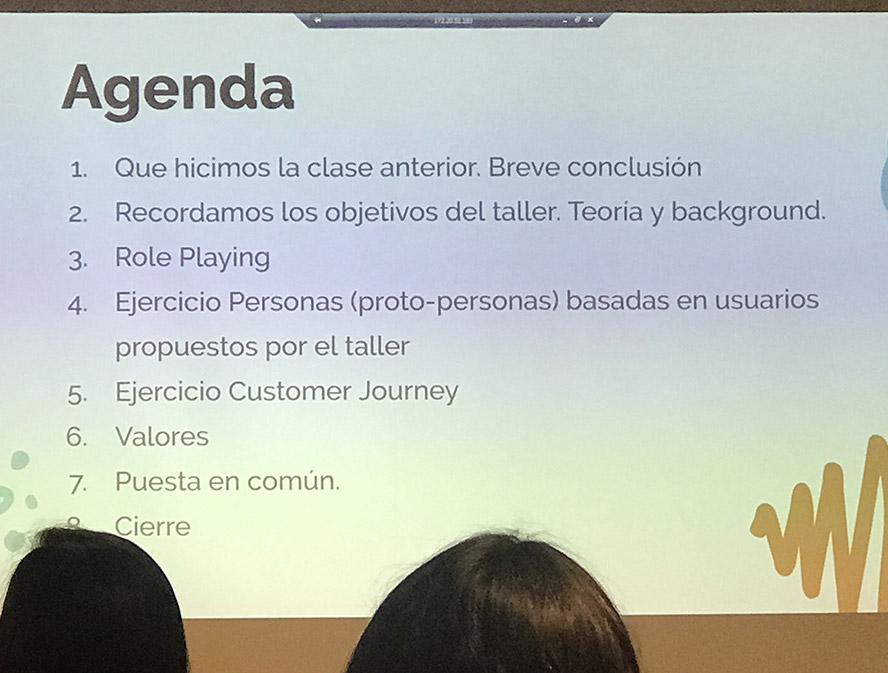
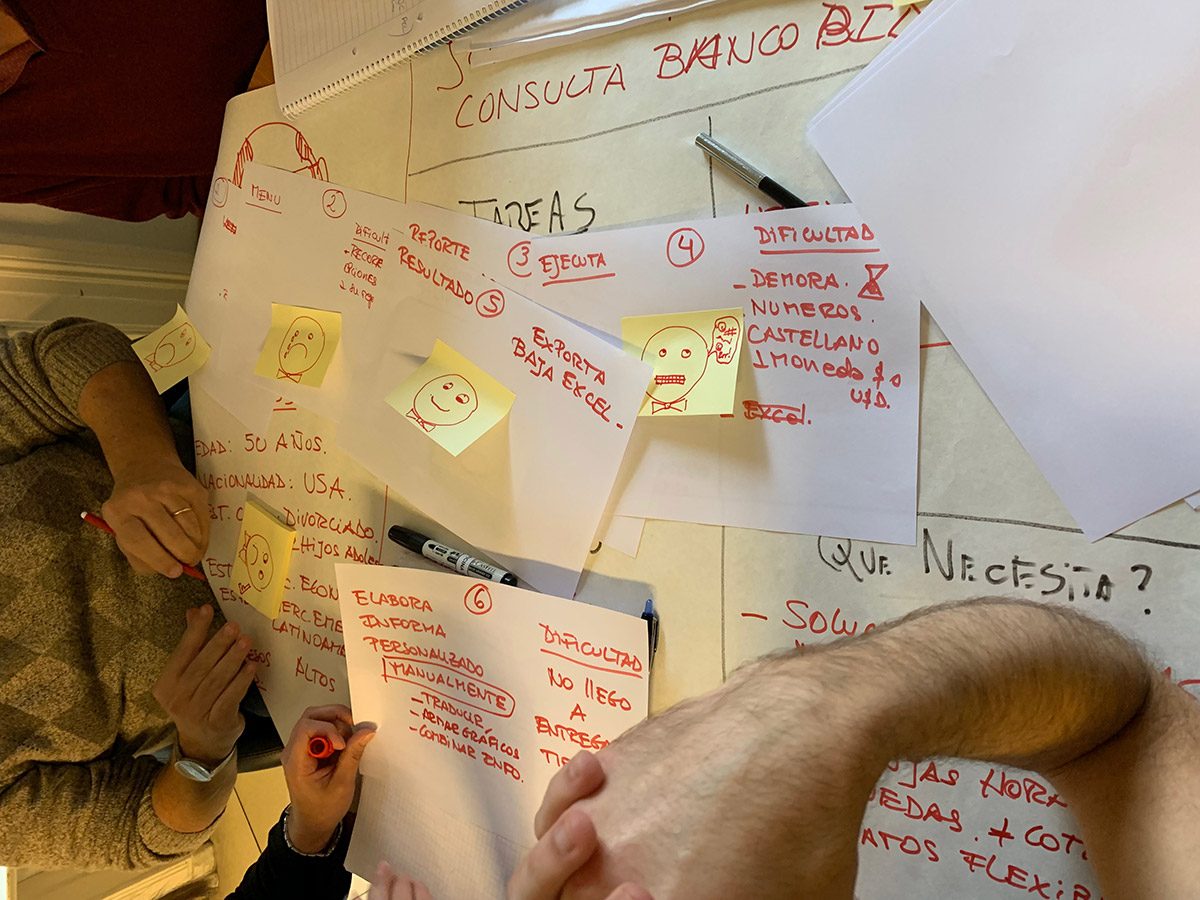
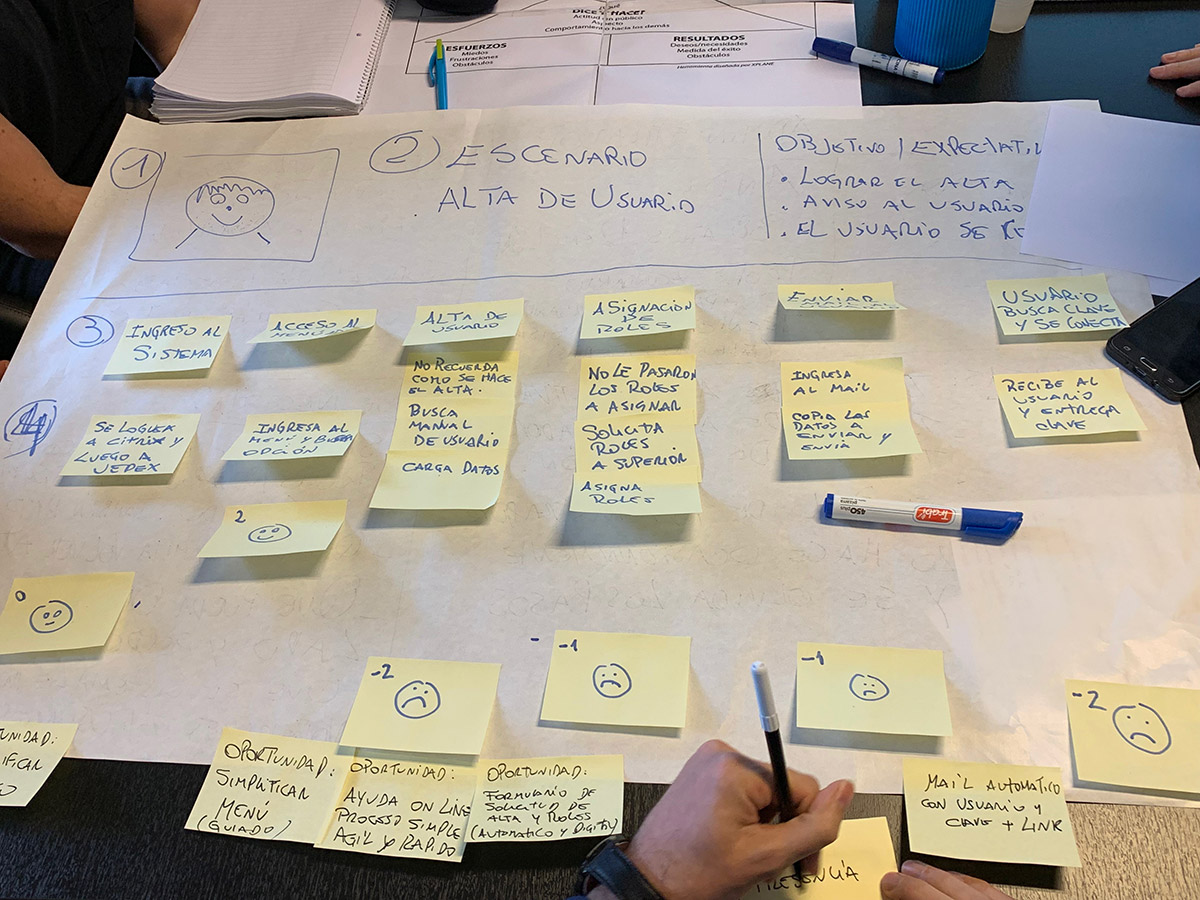
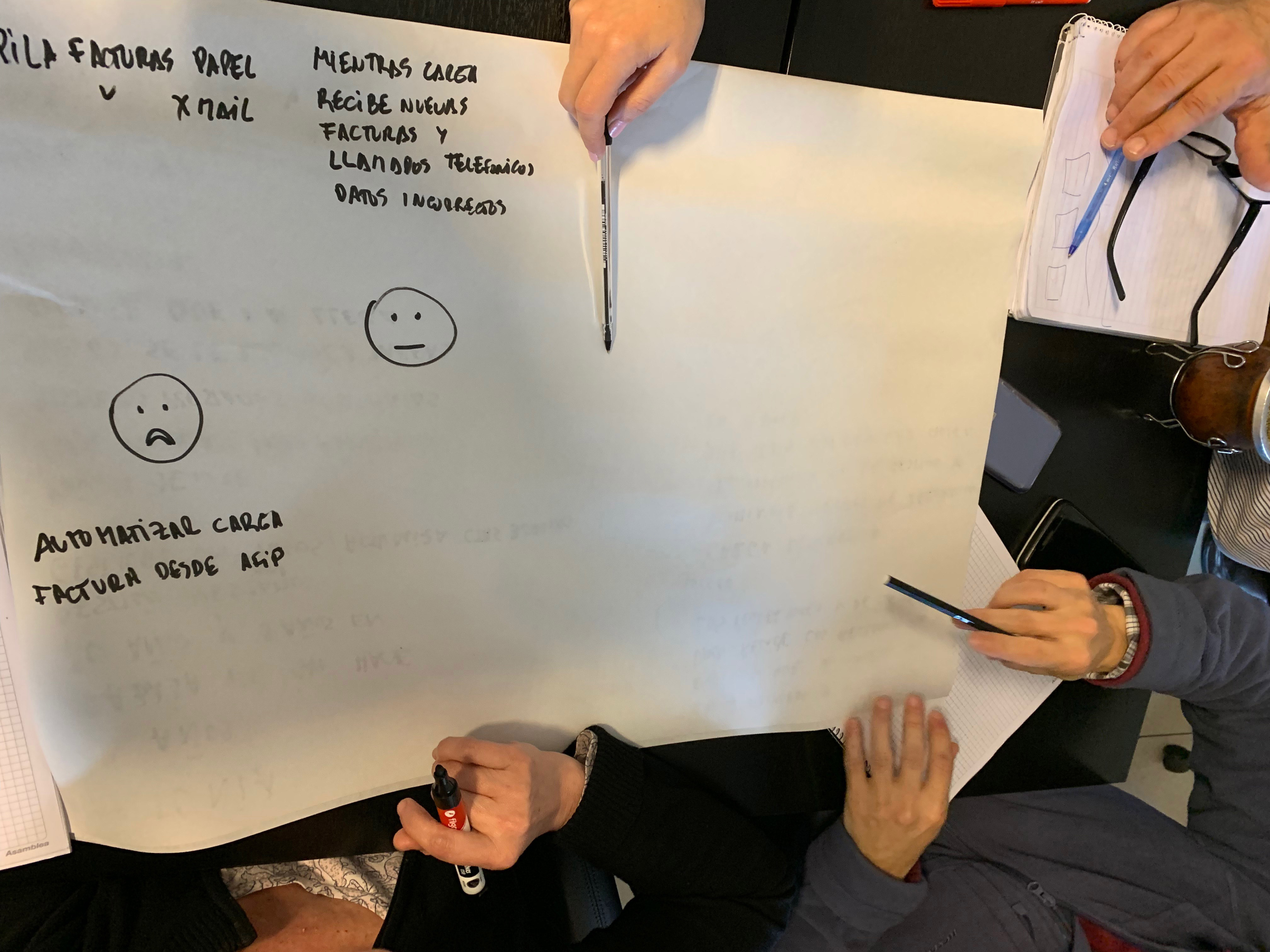
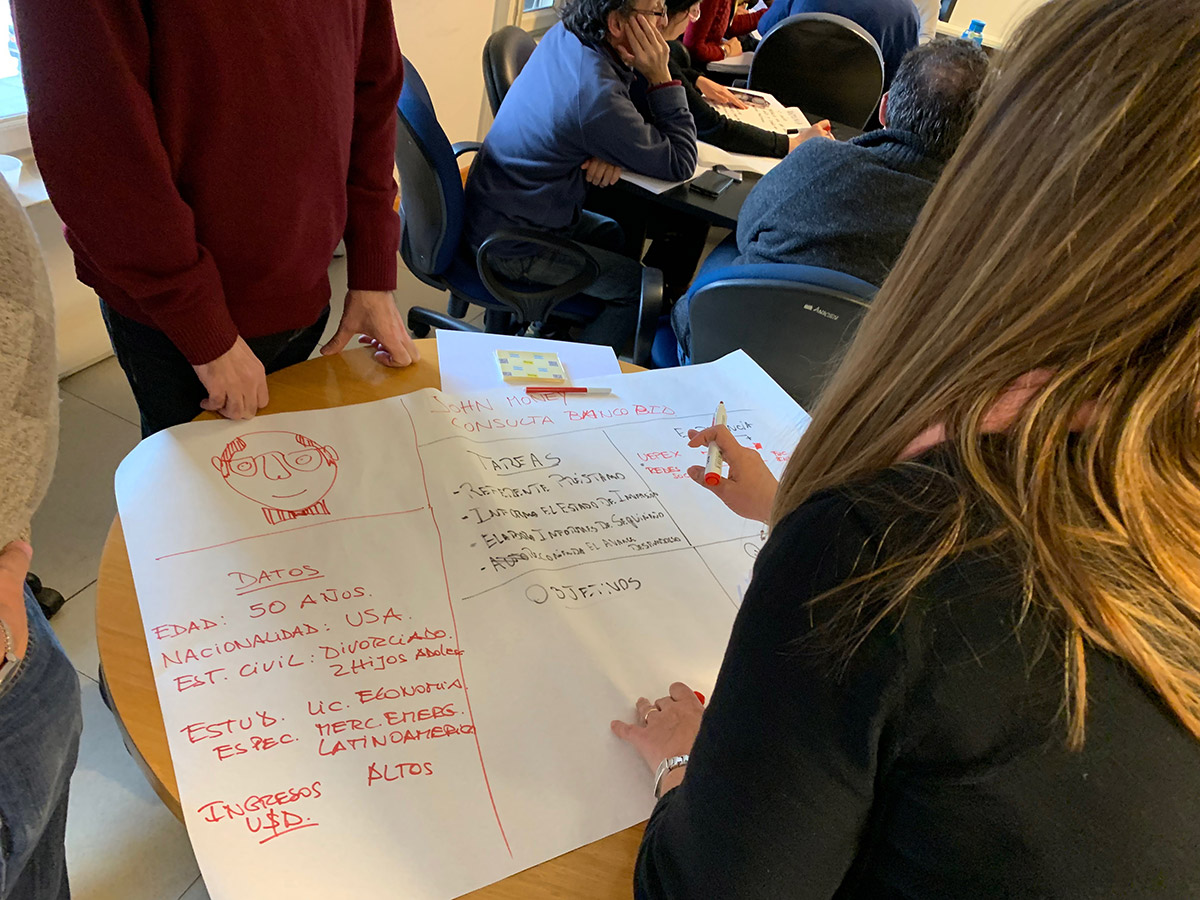
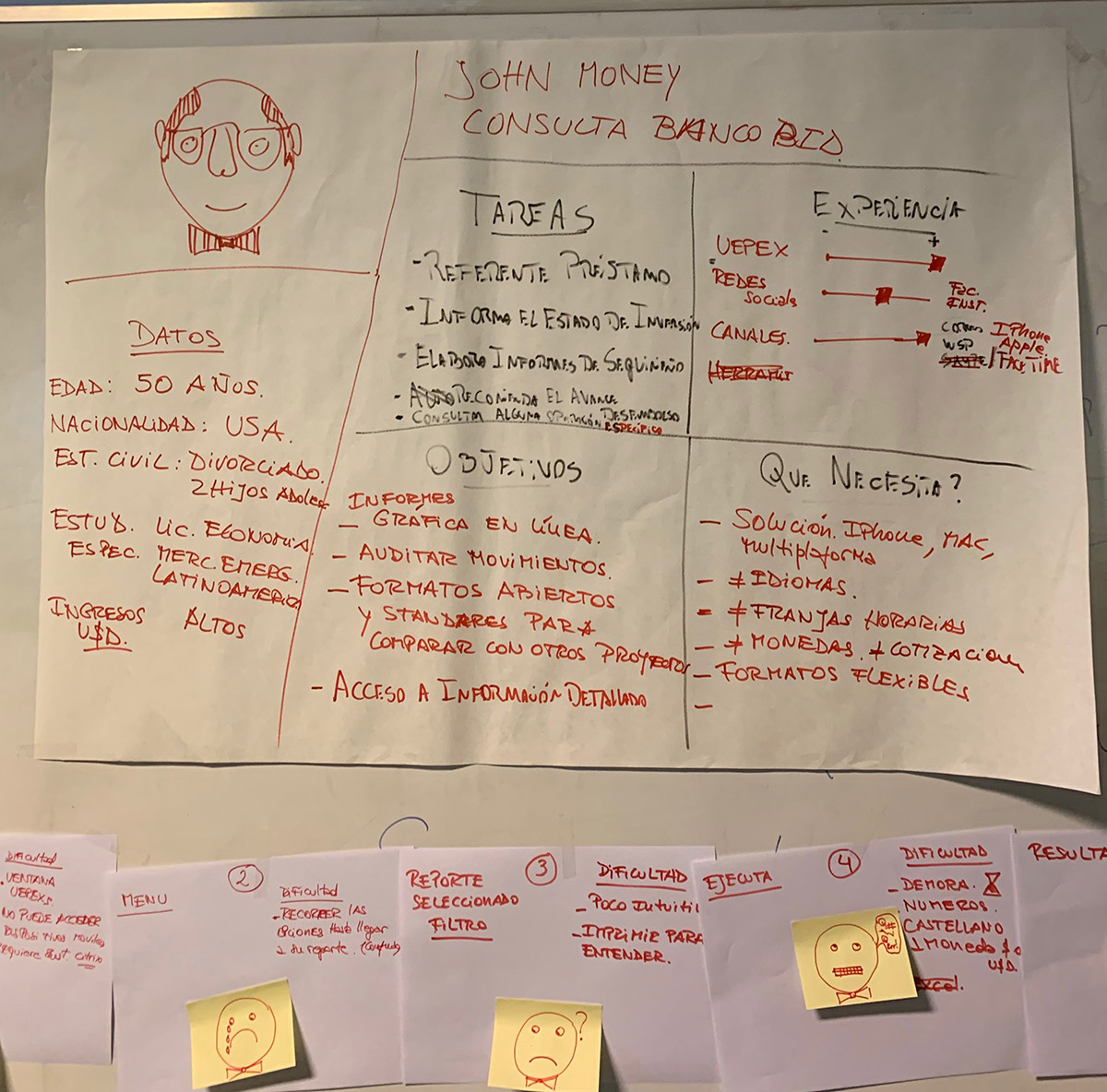
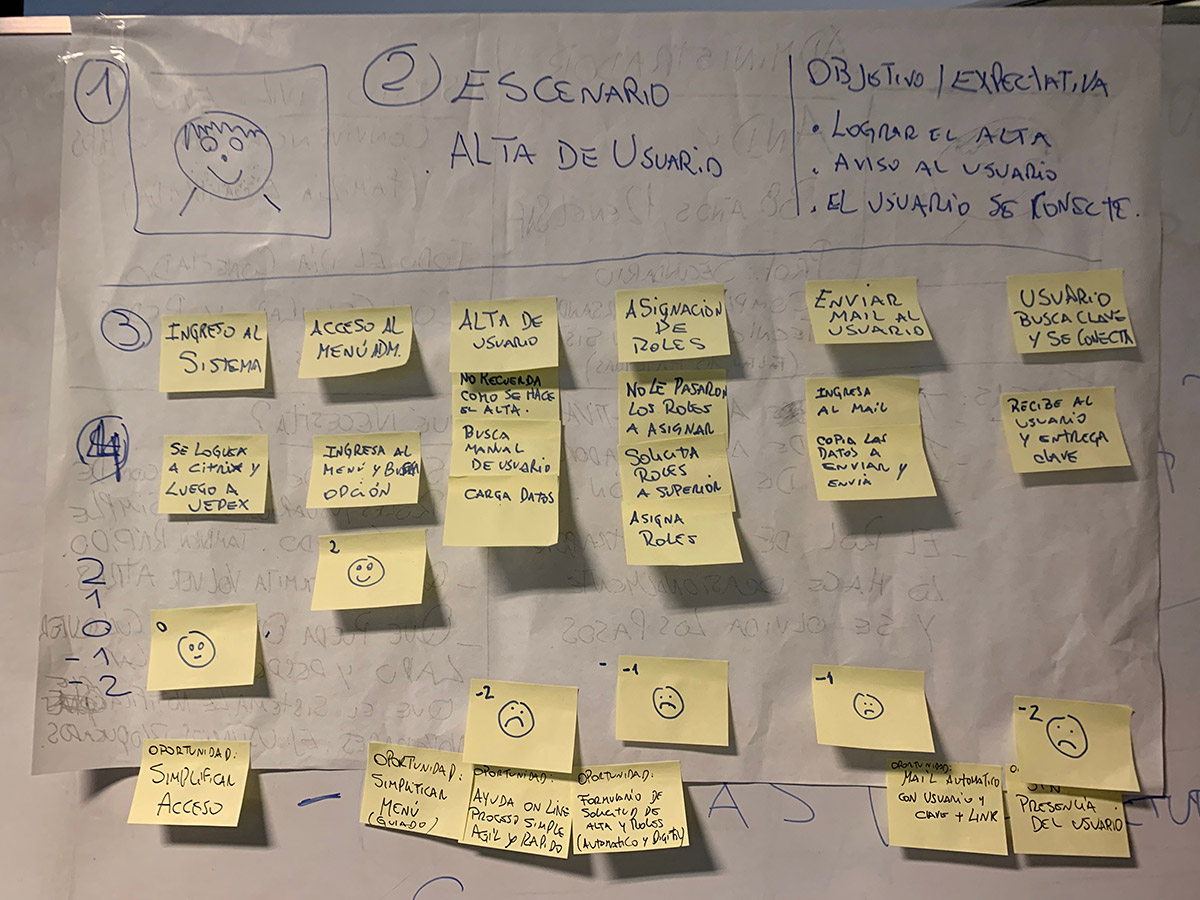
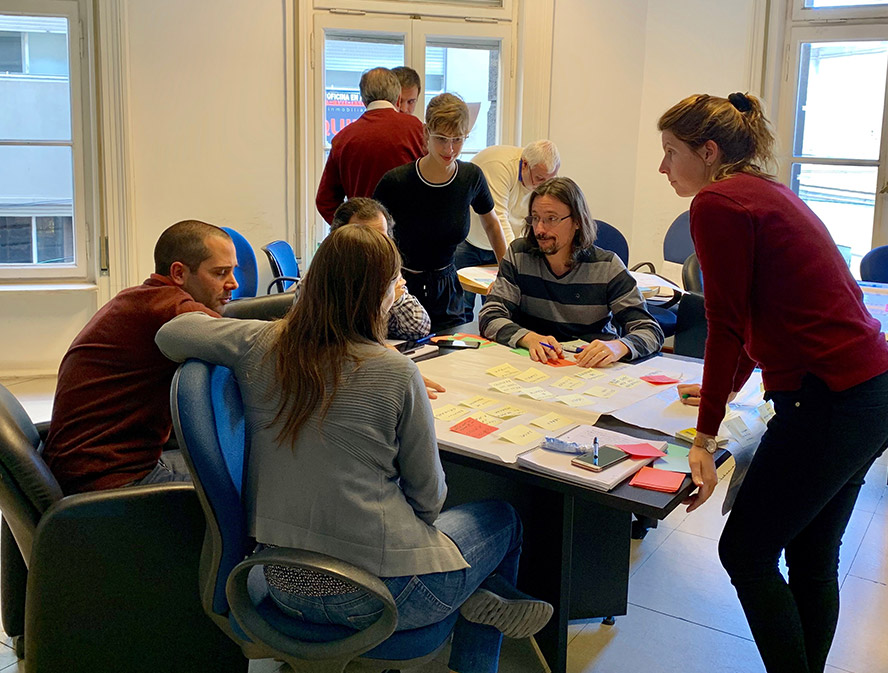
Role playing to explain personas, then a personas exercise based on the users proposed — we had previously run research with the analysts. We closed with a customer journey exercise.
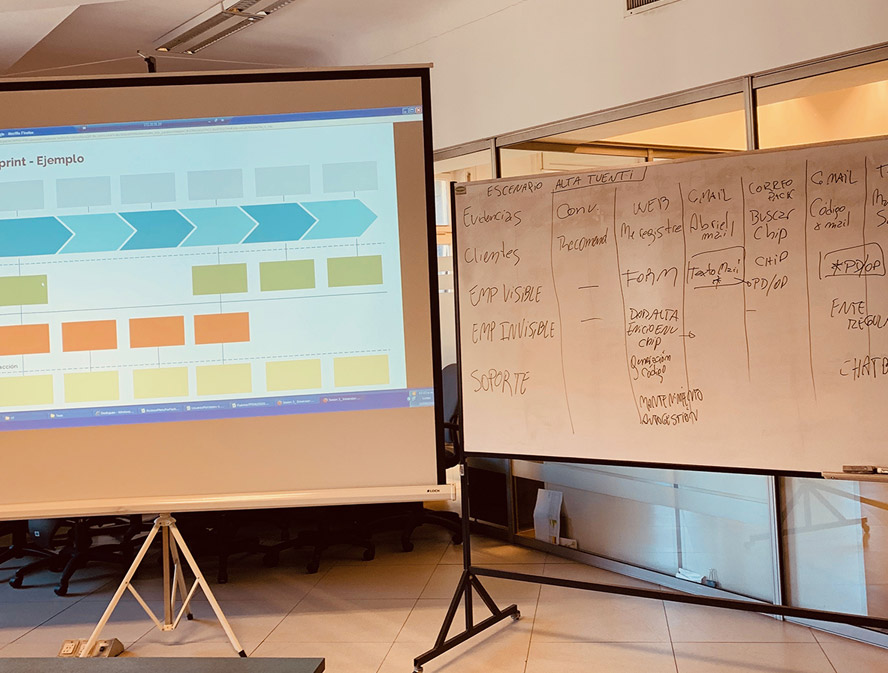
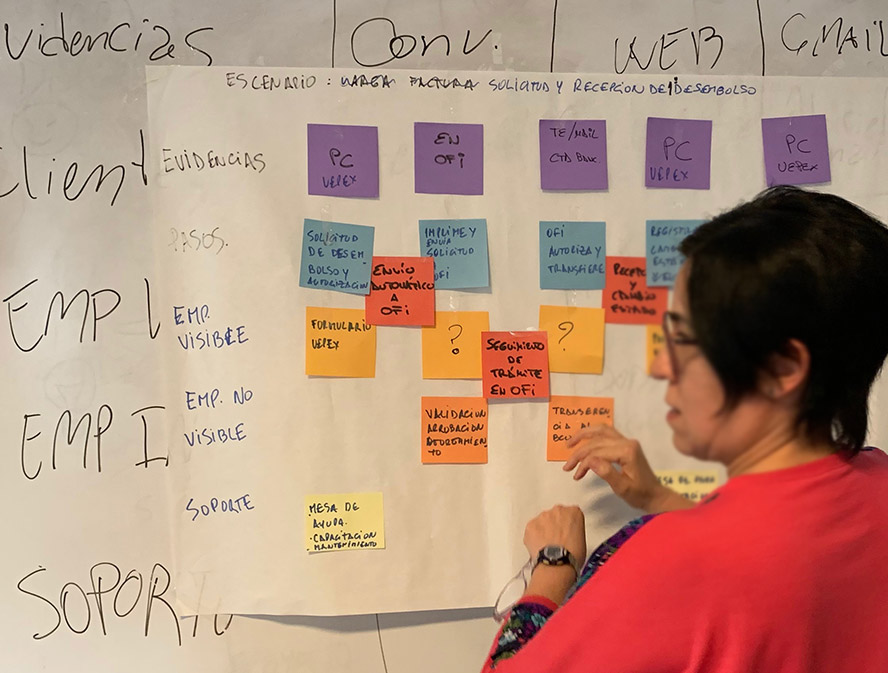
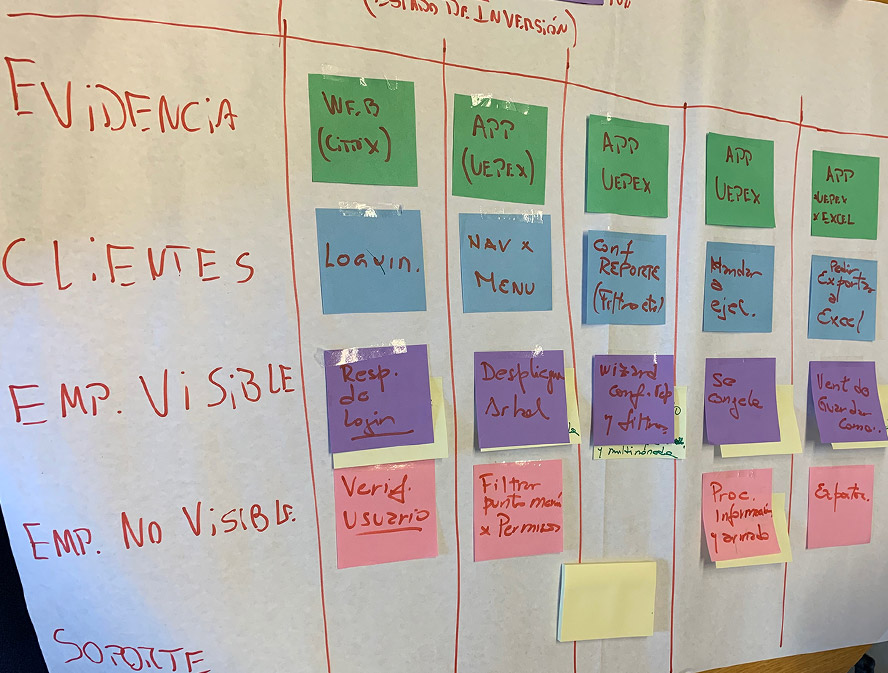
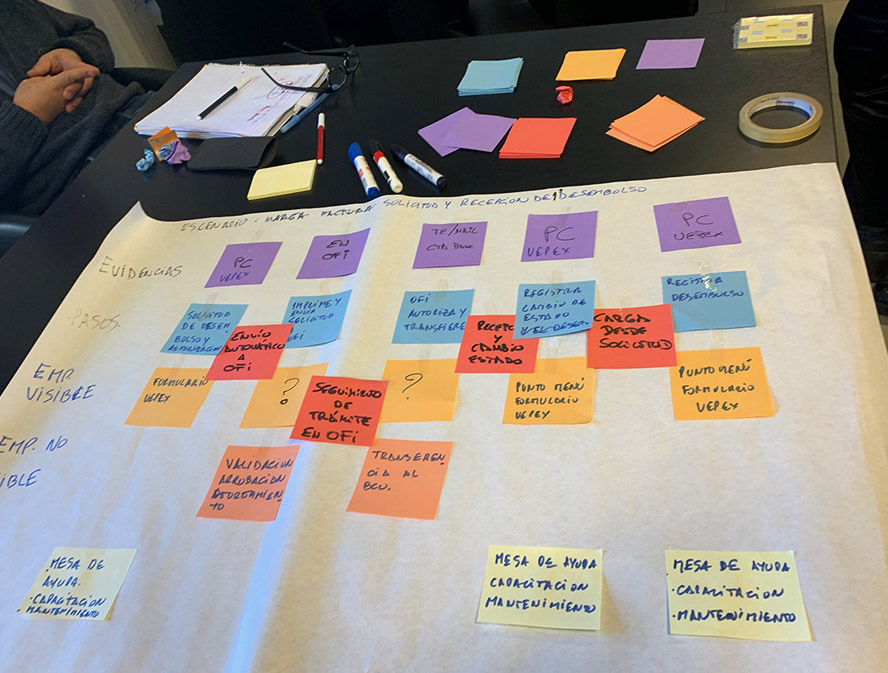
Session 3 — Service blueprint
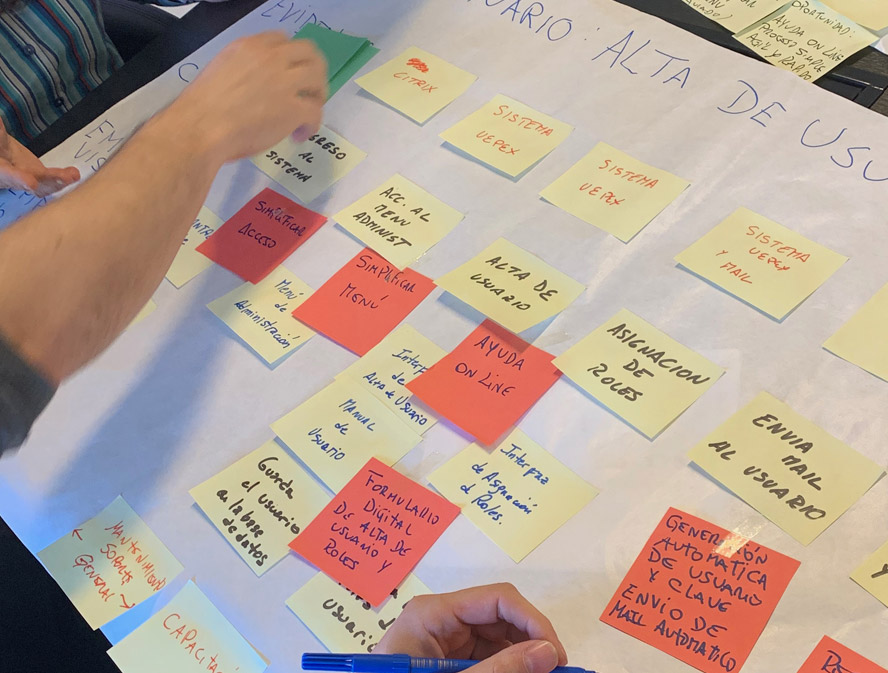
Mapping the service end to end: the steps the user goes through, what happens behind the scenes, and where the process breaks down.
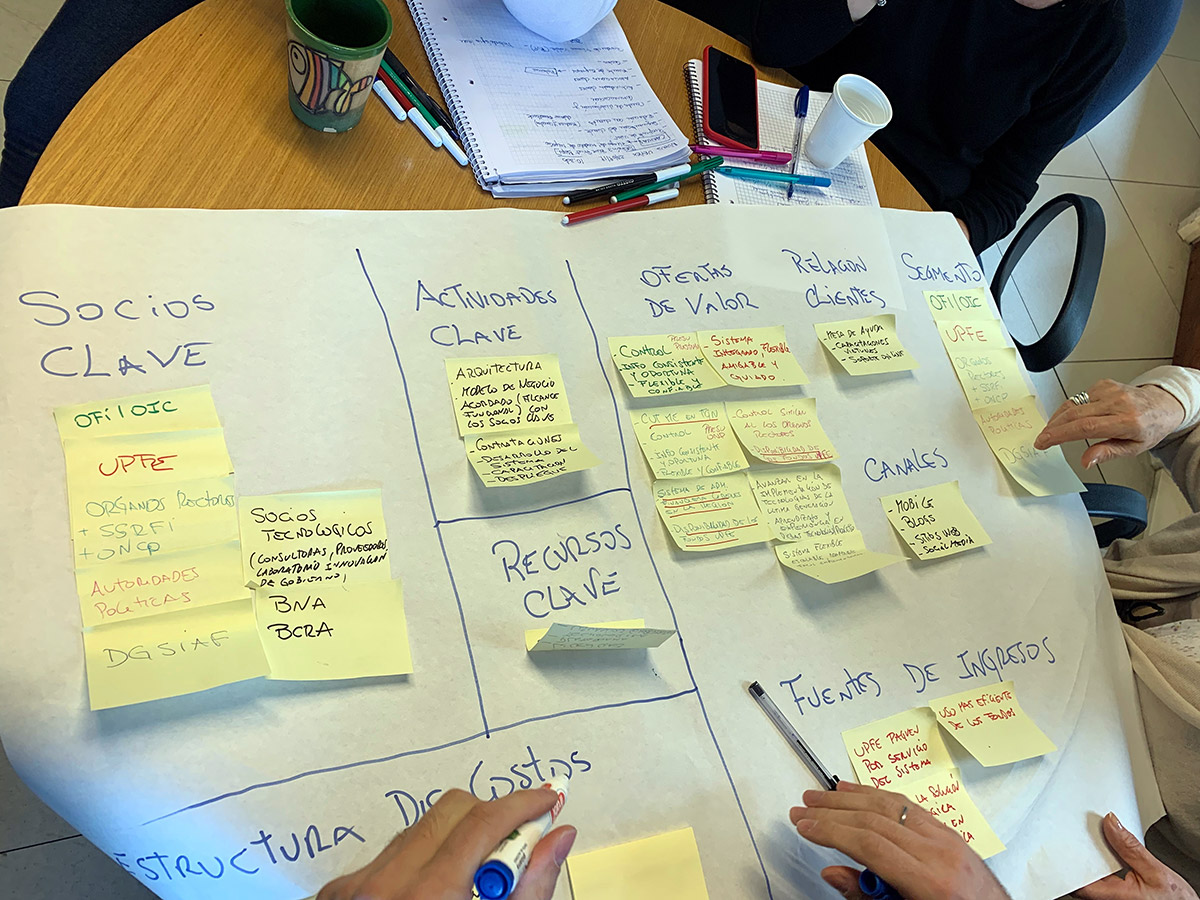
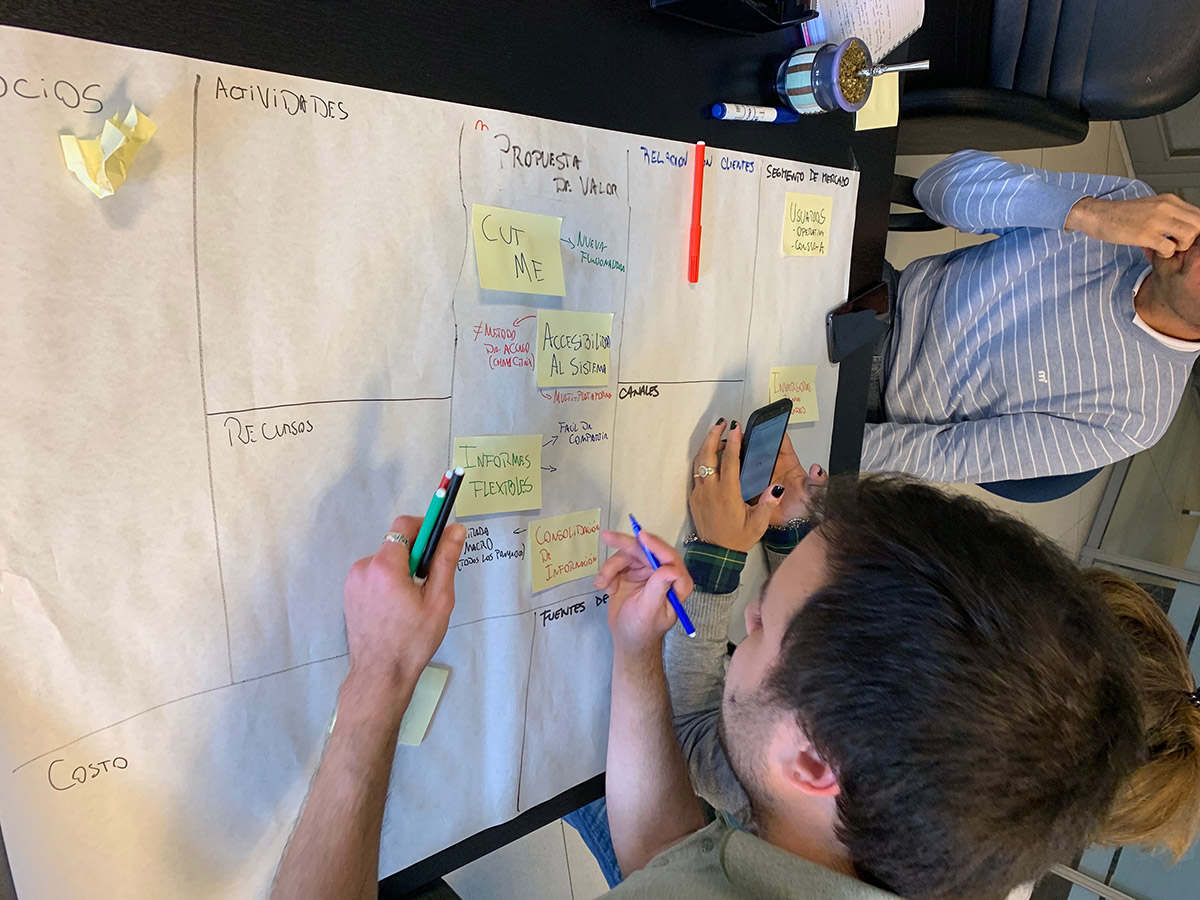
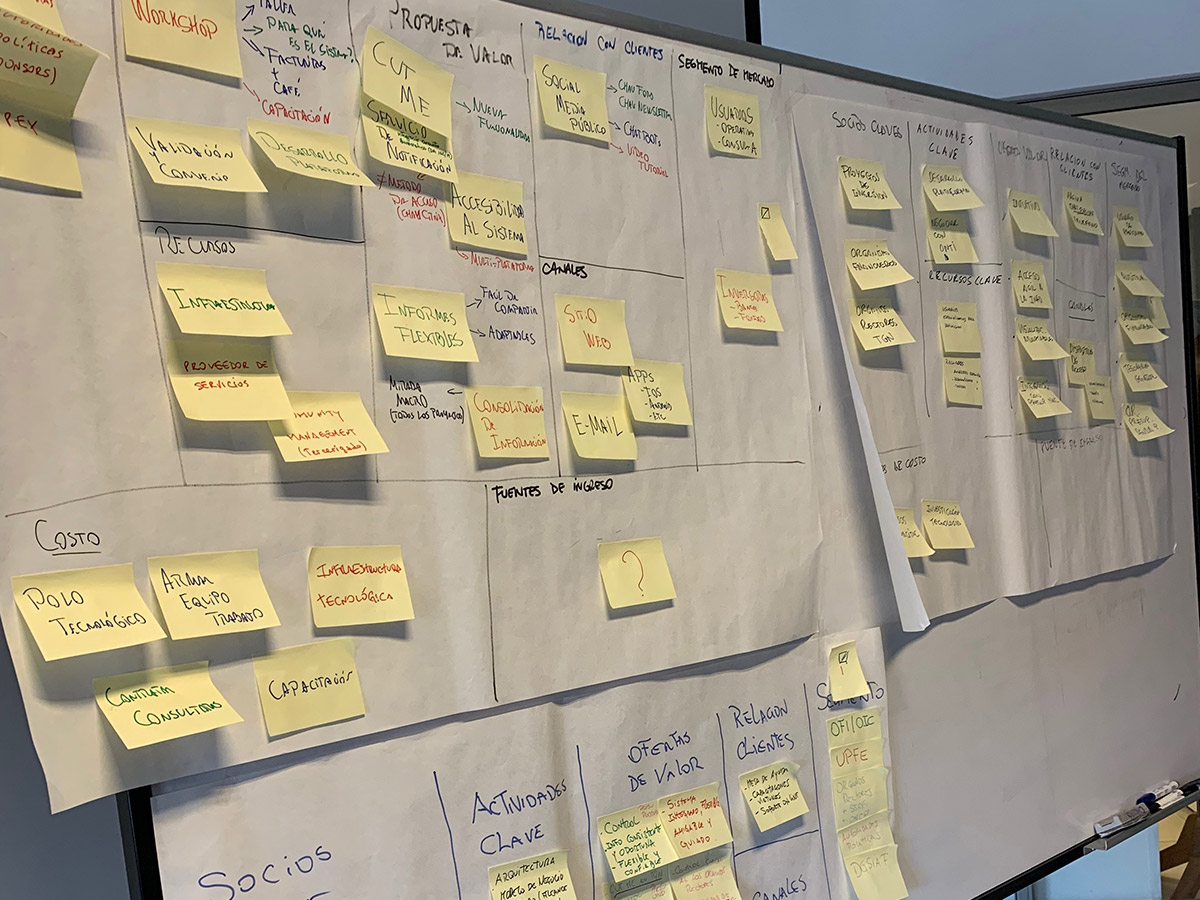
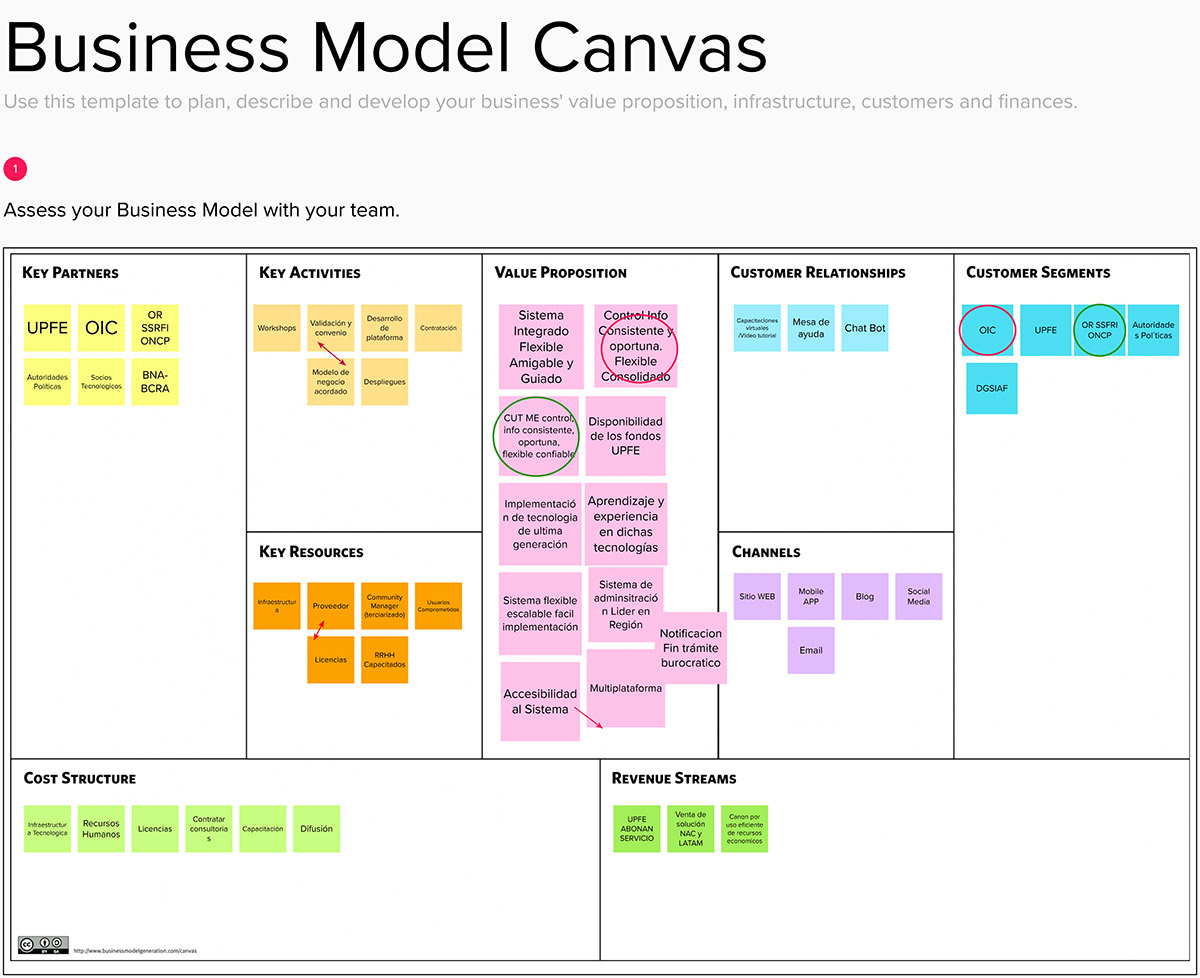
Session 4 — Business canvas
Closing the programme by tying the work back to the business: value proposition, risks and opportunities, and the tactics to get to the final product.