How to encourage exchanges over refunds
Transforming profitability and efficiency in a returns portal
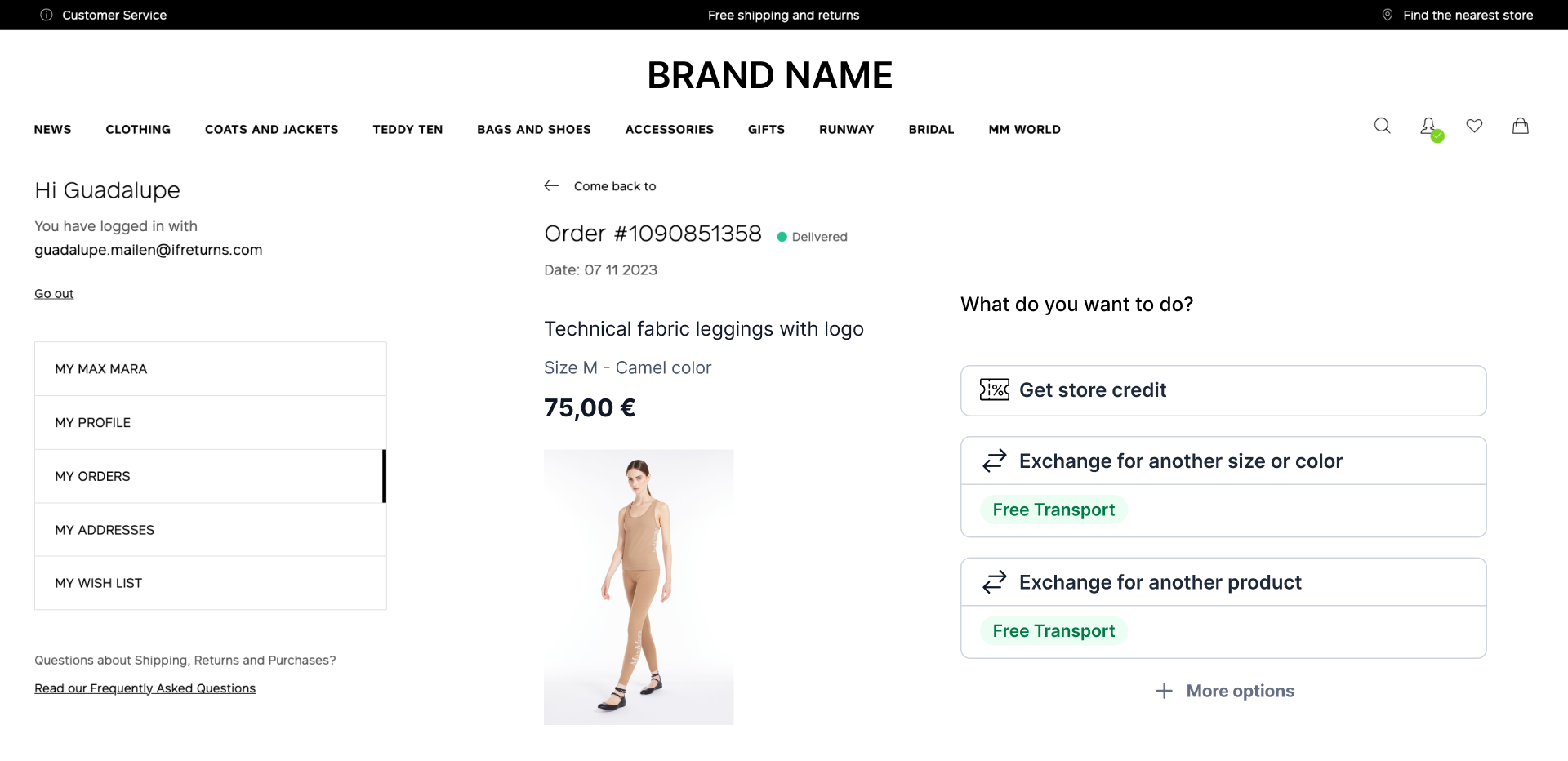
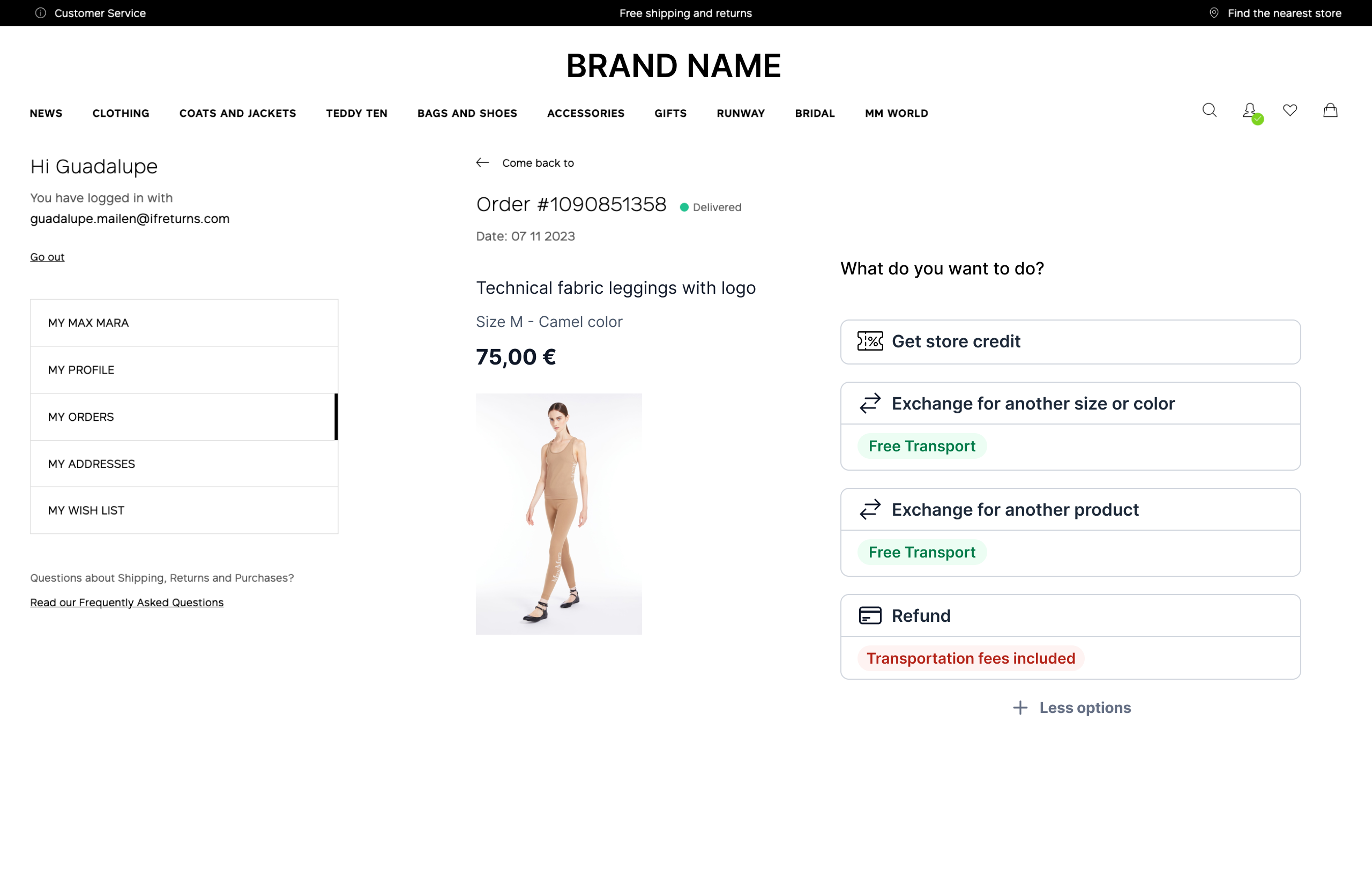
The returns portal is a platform where shoppers of digital-first brands process a return or an exchange. My challenge was to change consumer behaviour: instead of choosing a refund, choose an exchange.
The problem
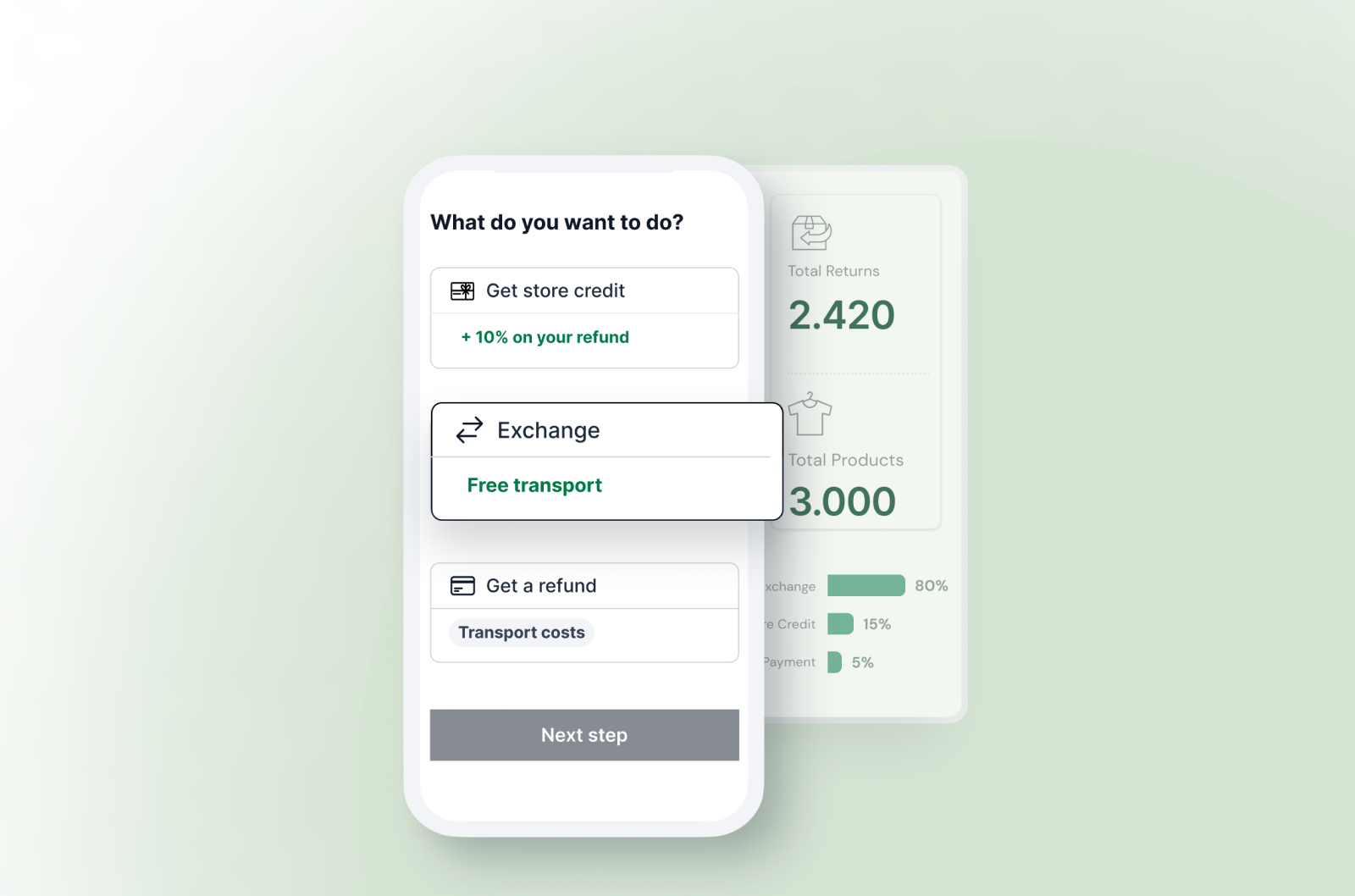
Refunds were 80% of all transactions, which meant brands retained almost no revenue — no store credit, no exchange, just money going back out.
For the brands, every refund also carried return shipping costs and manual work. Some months net sales approached zero.
“Covering return shipping costs remains a constant challenge for our eCommerce brand, eating into our profit margins.”
“The persistent high volume of returns directly affects our revenue. Some months, our net sales approach zero.”
“We’ve had to hire an entire team to handle existing return requests.”
Product goal
Make product exchanges effortless through an intuitive search experience with access to the full brand catalogue — and tie that goal directly to the roadmap.
We added intelligence based on the reason for the return: if the item is too small, the system automatically offers the next size up.
Approach
- Generative research: 8 in-depth interviews
- Survey with existing users
- Co-creative workshops to reach consensus and surface divergences
- Evaluative research: 8 usability tests
- Metrics analysis
- Recommended (not in place): heatmaps and session recordings
A key finding: shoppers get frustrated when returning for sizing reasons. They value a system that offers the right size straight away — it saves them time and effort, and it keeps the sale.
Concept 1 — Extra credit on exchange
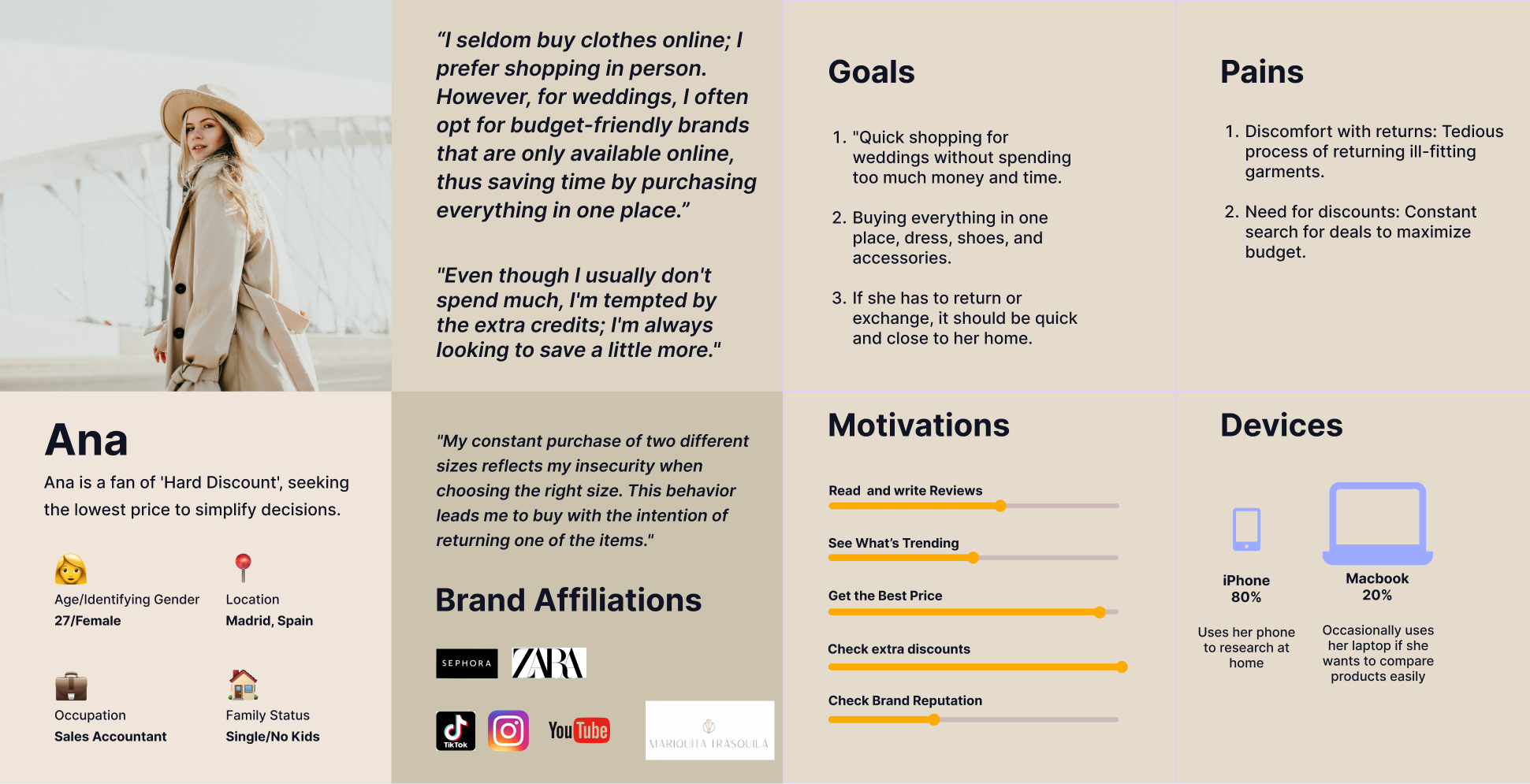
During validation, one proto-persona stood out: people who only browse offers, but become highly motivated by extra credit.
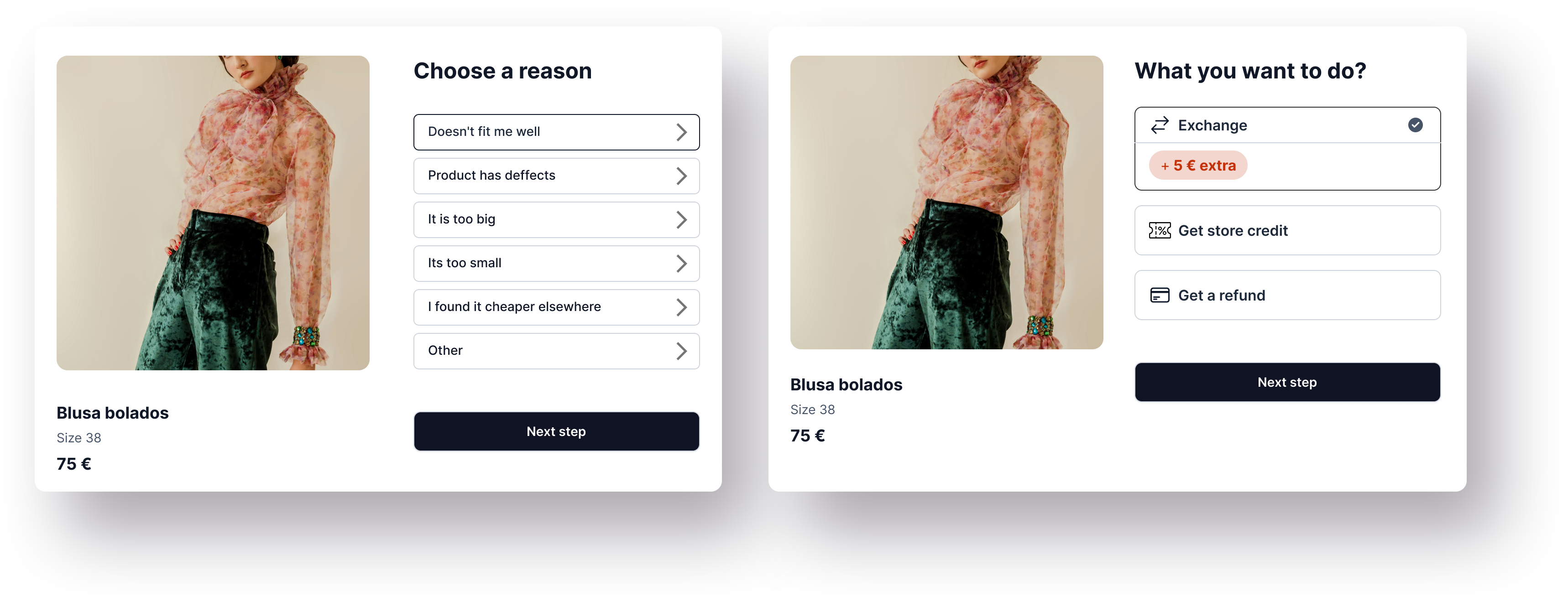
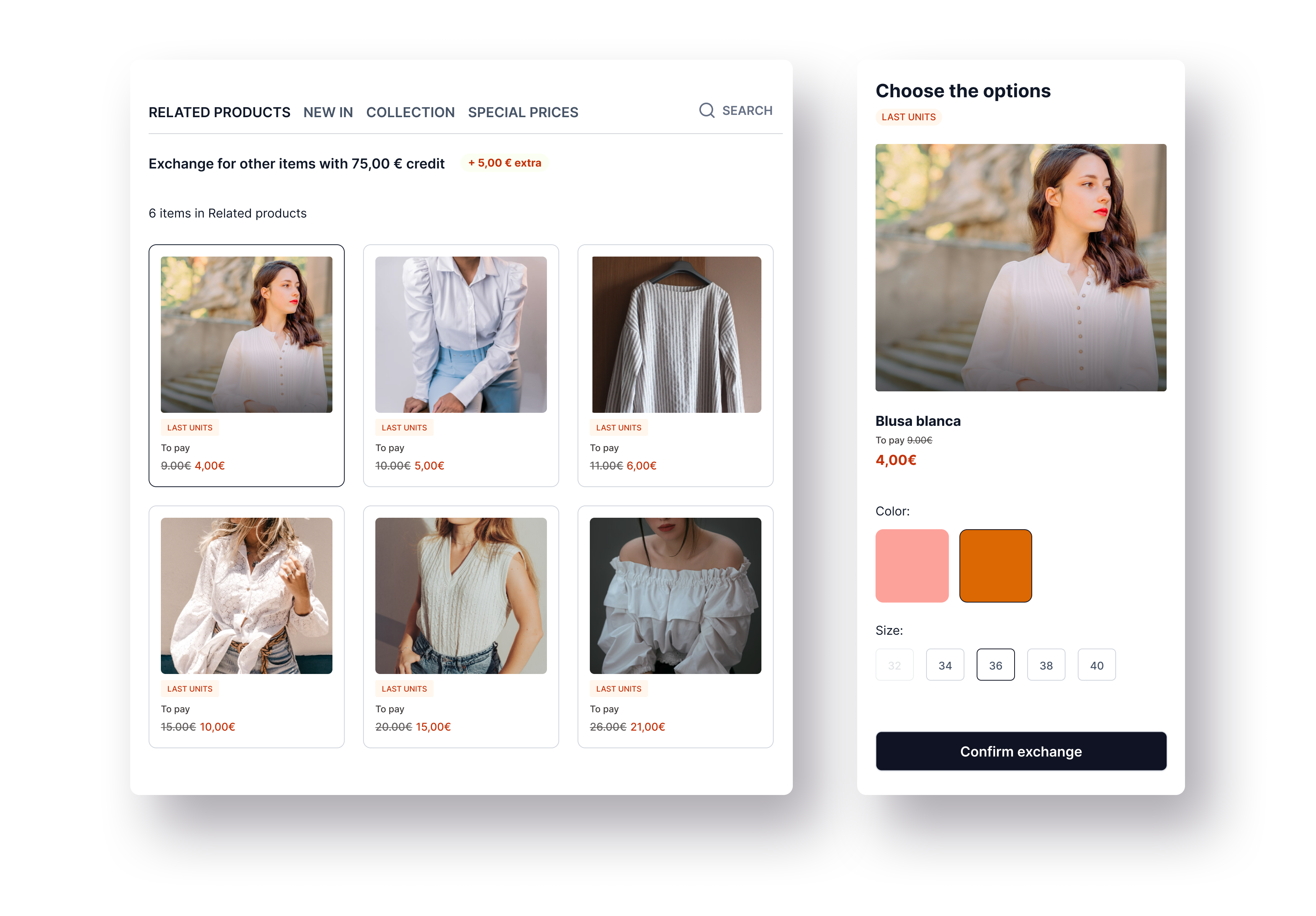
With the Product Manager I led an incentive to trade up: extra credit — as a percentage or a fixed amount — when the shopper chooses an exchange. Customers who came to refund left with a new product, and the brand retained the revenue.
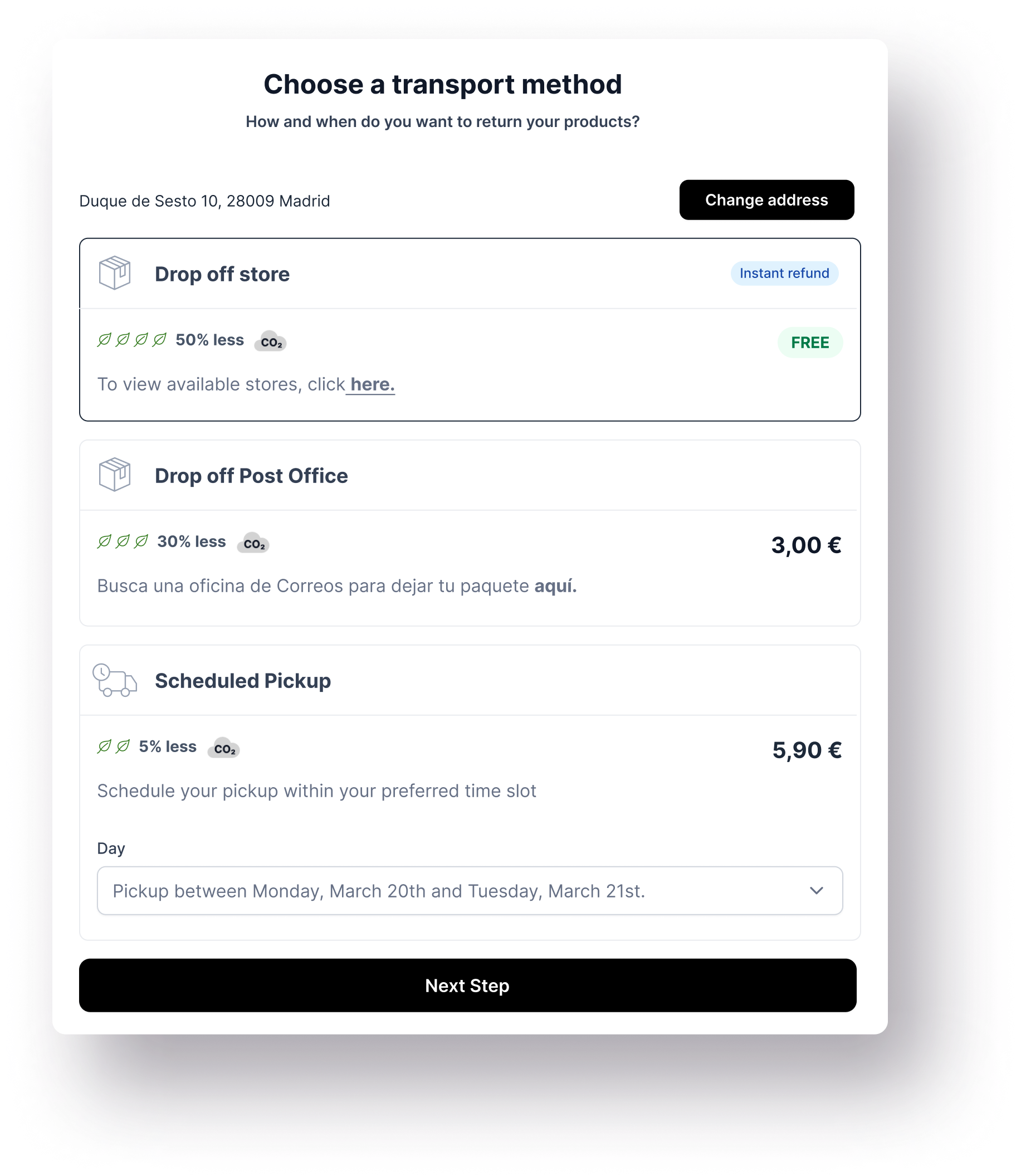
Transportation step: specific messaging explains the sustainability benefit of drop-off points, which also cuts logistics costs.
Concept 2 — Direct replacement for furniture
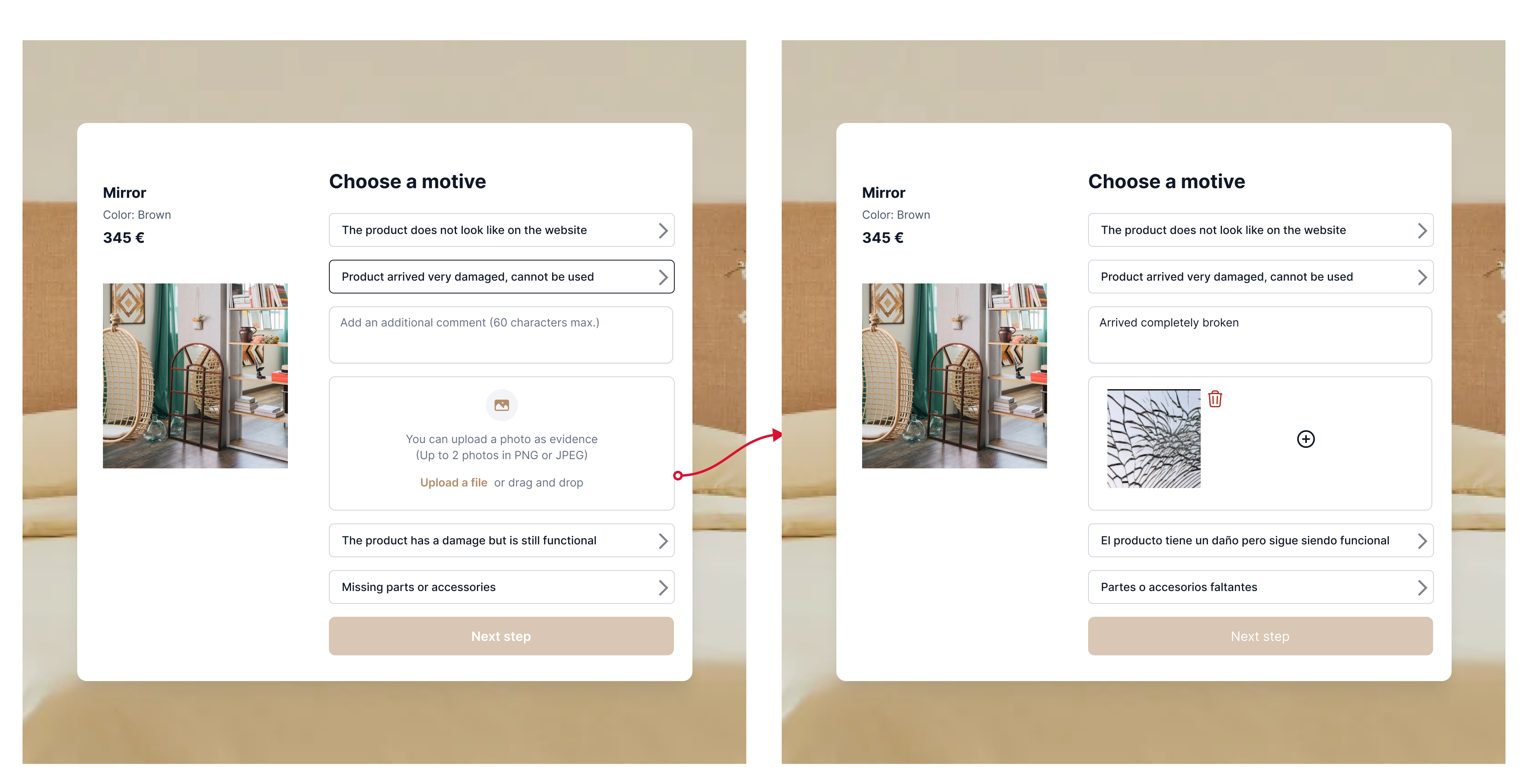
For furniture brands we explored direct exchange of defective products, guiding shoppers towards higher-value items. If the product arrives broken, the user uploads a photo to verify the condition and it is replaced at no cost, plus 20% (or a fixed amount in euros) of credit for future purchases.
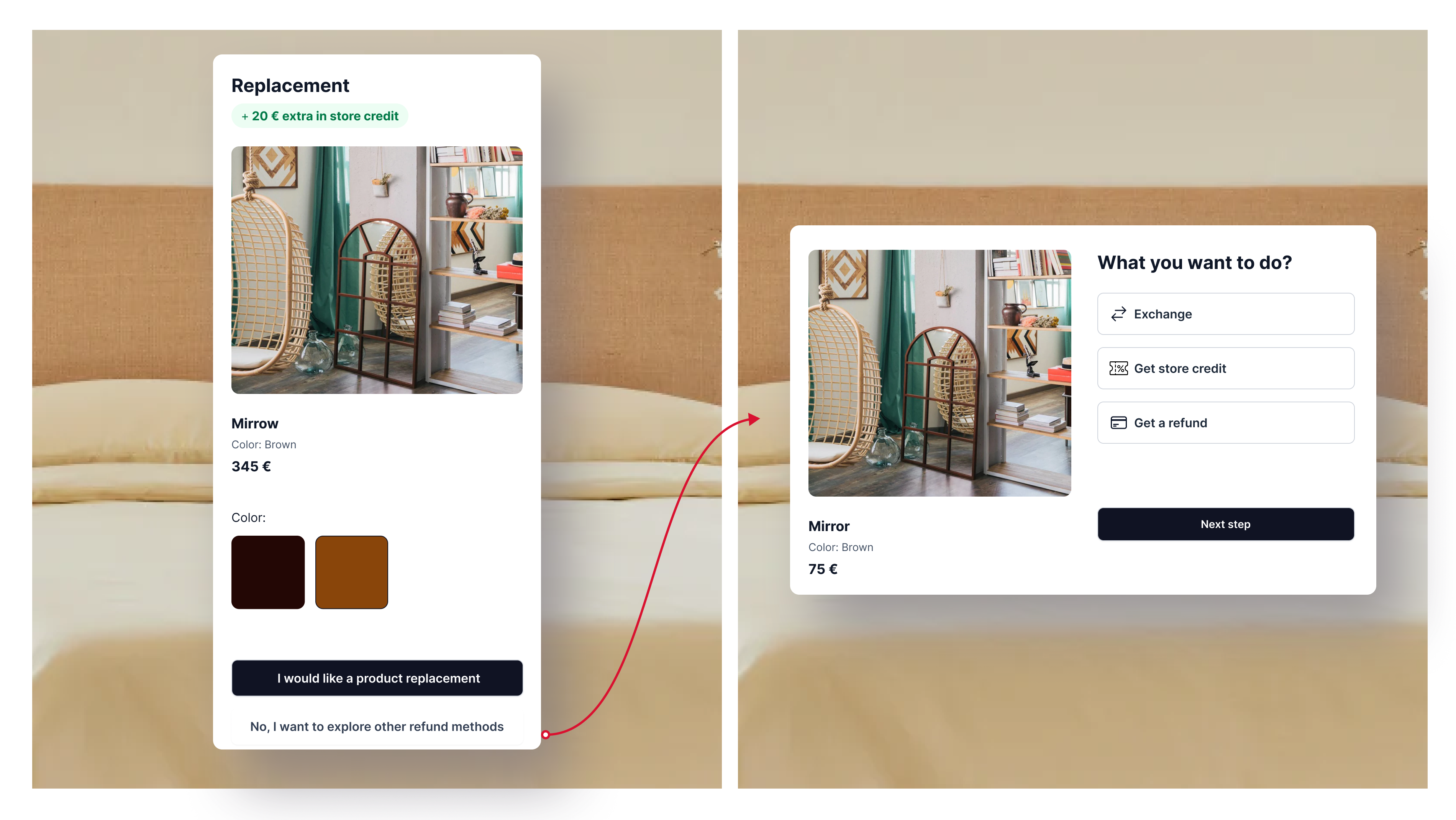
Concept 3 — Deprioritising the refund
We also experimented with concealing the refund option in the flow.